 jklib
jklibKonva
HTML5 Canvas Framework for Desktop and Mobile Applications
Konva
Build interactive graphics, editors, and diagrams for the web.






Konva is an open-source 2D canvas framework for interactive graphics. Its scene graph gives each shape its own events, drag behavior, transforms, animation, cache, and export controls.
Use Konva for design editors, whiteboards, diagrams, annotations, maps, and other visual tools. Konva is MIT licensed and does not require a license key.
This repository began as a GitHub fork of ericdrowell/KineticJS.
- Visit: The Home Page and follow on Twitter
- Discover: Tutorials, API Documentation
- Try it: Canvas Editor, Free Drawing, Image Crop, Window Frame Designer, and more demos
- Used by: Polotno (design editor SDK) and many others — see the full showcase on the home page
- Help: StackOverflow, Discord Chat
- Support the project: Star Konva on GitHub
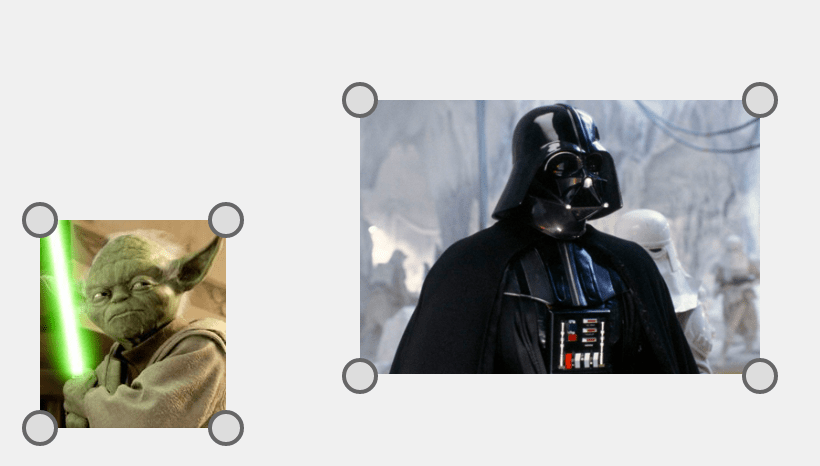
Framework integrations
| Framework | Package | Documentation |
|---|---|---|
| React | react-konva | React guide |
| Vue | vue-konva | Vue guide |
| Svelte | svelte-konva | Svelte guide |
| Angular | ng2-konva | Angular guide |
Quick Look
import Konva from 'konva';

const container = document.createElement('div');
document.body.appendChild(container);

const stage = new Konva.Stage({ container, width: 600, height: 400 });
const layer = new Konva.Layer();
const box = new Konva.Rect({
  x: 50, y: 50, width: 120, height: 80,
  fill: '#00a8e8', draggable: true,
});

layer.add(box);
stage.add(layer);
Building a full design editor? Polotno is a commercial design editor SDK built on Konva by the Konva maintainers. It ships templates, text editing, and export, so you integrate an editor instead of building one:
npm install polotno.
Browsers support
Konva works in modern mobile and desktop browsers that support ES2018.
Debugging
The Chrome inspector simply shows the canvas element. To see the Konva objects and their details, install the konva-dev extension at https://github.com/konvajs/konva-devtool.
Loading and installing Konva
Konva supports UMD loading. So you can use all possible variants to load the framework into your project:
Load Konva via classical <script> tag from CDN:
<script src="https://unpkg.com/konva@10/konva.min.js"></script>
Install with npm:
npm install konva
// The modern way (e.g. an ES6-style import for webpack, parcel)
import Konva from 'konva';
Typescript usage
Add DOM definitions into your tsconfig.json:
{
  "compilerOptions": {
    "lib": [
        "es6",
        "dom"
    ]
  }
}
3 Minimal bundle
import Konva from 'konva/lib/Core';
// Now you have a Konva object with Stage, Layer, FastLayer, Group, Shape and some additional utils function.
// Also core currently already have support for drag&drop and animations.
// BUT there are no shapes (rect, circle, etc), no filters.

// but you can simply add anything you need:
import { Rect } from 'konva/lib/shapes/Rect';
// importing a shape will automatically inject it into Konva object

var rect1 = new Rect();
// or:
var shape = new Konva.Rect();

// for filters you can use this:
import { Blur } from 'konva/lib/filters/Blur';
4 NodeJS env
In order to run konva in nodejs environment you also need to install canvas or skia-canvas package manually for rendering backend.
# node-canvas backend
npm install konva canvas
# skia-canvas backend
npm install konva skia-canvas
Use the same scene graph API for server-side rendering and omit the stage's container attribute. DOM events require a browser, and canvas feature support depends on the selected backend.
import Konva from 'konva';
import 'konva/canvas-backend'; // or import 'konva/skia-backend';

const stage = new Konva.Stage({
  width: 500,
  height: 500,
});
// Add shapes and export the stage with the usual Konva drawing API.
Backers
Konva is maintained by the team behind Polotno, a commercial design editor SDK built on Konva, which sponsors ongoing development.

Change log
See CHANGELOG.md.
Building the Konva Framework
To make a full build run npm run build. The command will compile all typescript files, combine then into one bundle and run minifier.
Testing
Konva uses Mocha for testing.
- If you need run test only one time run
npm run test. - While developing it is easy to use
npm start. Just run it and go to http://localhost:1234/unit-tests.html. The watcher will rebuild the bundle on any change.
Konva is covered with hundreds of tests and well over a thousand assertions. For each feature or bug fix, write a failing test first, implement the behavior, then verify that the test passes (test-driven development).
Generate documentation
Run npm run build, then npx gulp api to generate documentation from the current bundle in the api folder.
Pull Requests
I'd be happy to review any pull requests that may better the Konva project,
in particular if you have a bug fix, enhancement, or a new shape (see src/shapes for examples). Before doing so, please first make sure that all of the tests pass (npm run test).
Contributors
Financial Contributors
Become a financial contributor and help us sustain our community. [Contribute]
Individuals

Organizations
Support this project with your organization. Your logo will show up here with a link to your website. [Contribute]





Latest Version
v10.6.0GitHub
License
MIT
Dependencies
0 production